Explore our core engineering catalog, designed to meet rigorous industry parameters and high manufacturing standards.
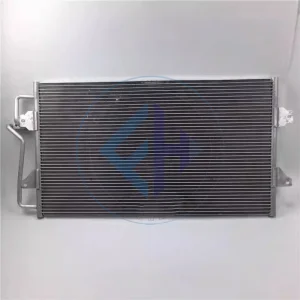
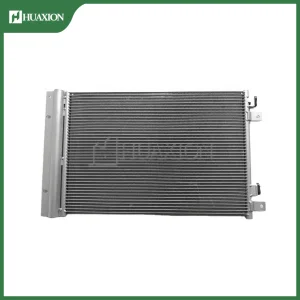
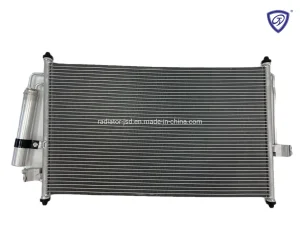
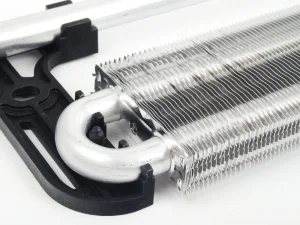
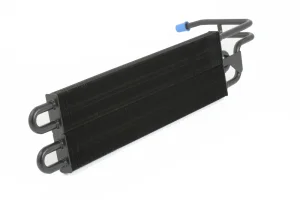
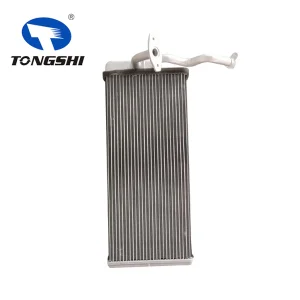
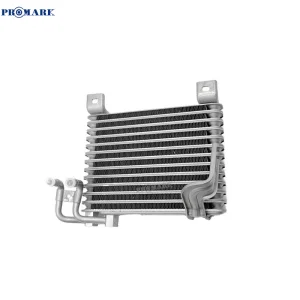
Established in 2007, Zhejiang Rock Auto Co., Ltd. has evolved into a premier manufacturer, exporter, and supplier of high-performance auto cooling system components. Our engineers specialize in designing and producing an expansive array of thermal management solutions, including radiator tubes, intercooler tubes, oil cooler tubes, as well as complete radiators, intercoolers, and oil coolers.
Guided by a relentless commitment to excellence and client satisfaction, we employ structured manufacturing workflows. From initial architectural drafting to metallurgical testing and validation, we guarantee that our structural elements exceed tier-1 OEM expectations. Our continuous research and development (R&D) efforts allow us to discover and deploy new materials, optimizing heat transfer and structural longevity across demanding applications.

As the global automotive industry navigates a transition from internal combustion engines (ICE) toward electrification, the dynamics of automotive parts distribution have shifted. Standard thermal systems are no longer merely auxiliary cooling loops; they are critical pathways that influence powertrain efficiency, battery safety, and overall vehicle lifecycle. As a high-capacity OEM/ODM automotive parts manufacturer, Zhejiang Rock Auto Co., Ltd. plays a vital role in providing specialized cooling hardware.
Modern supply chains demand modular, lightweight, and thermally efficient components. Traditional cooling solutions rely heavily on robust aluminum alloys, but next-generation vehicles require multi-channel heat exchangers, smart condenser configurations, and integrated EV battery cooling arrays. Achieving these tight physical tolerances requires significant structural expertise. By optimizing structural mechanics through high-precision fin designs and automated crimping machines, manufacturers can enhance flow distribution and heat exchange efficiency.
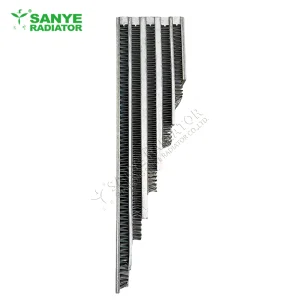
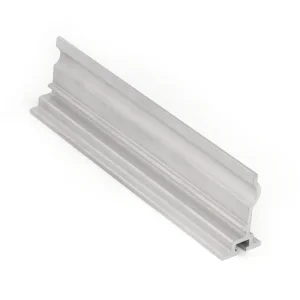
Utilizing anti-static and fire-retardant metrics, such as our proprietary perforated aluminum tubing, to withstand harsh dynamic stresses.
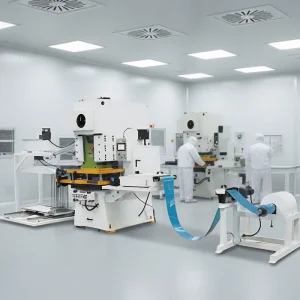
Leveraging high-capacity fin machines and automatic radiator water tank crimping systems to eliminate assembly variances.
Maintaining stringent IATF 16949 system certifications to secure access to European, American, and Asia-Pacific supply networks.
While consumer passenger vehicles represent a major component of our manufacturing volume, industrial thermal management demands versatility. Our aluminum cooling loops, high-performance intercoolers, and robust plate-fin cores are used across several key sectors:
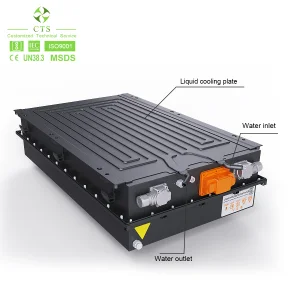
The transition to battery electric vehicles (BEVs) has redefined thermal management. Modern electric powertrains rely on liquid cold plates, high-capacity chillers, and specialized thermal interfaces to keep battery temperatures within their optimal window of 15°C to 35°C. At higher temperatures, thermal runaway risks increase; at lower temperatures, internal resistance rises, reducing vehicle range.
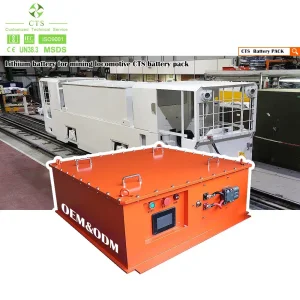
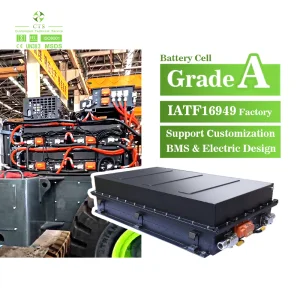
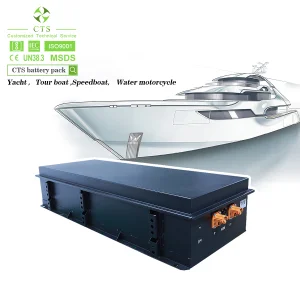
We manufacture custom aluminum tubes, battery module frames, and heat exchange plates that support these designs. Our EV battery modules—including the 400V, 500V, 600V, and 700V units—deliver reliable electrical insulation and high structural rigidity. They are engineered to help prevent cell-to-cell thermal propagation, which is essential for ensuring battery safety in passenger transit vehicles and heavy commercial trucks.

For global parts distributors, supply security is closely tied to regulatory compliance. At Zhejiang Rock Auto, our production processes follow global environmental standards, including REACH and RoHS. This compliance ensures that our products meet the chemical and environmental criteria required for import into the North American and European markets.
Additionally, our ISO/TS 16949 management system guides our manufacturing procedures. Every product batch is documented with trace materials certs and dimensions reports, helping clients reduce their quality assurance times. We support regional distributors with customized logistics setups, consolidated shipping plans, and active packaging solutions that protect precision-machined aluminum parts from oxidation during sea transport.
The selection of specific aluminum alloys is key to building durable, efficient heat exchangers. We primarily use 3003 and 6063 series aluminum, which offer an effective balance of thermal conductivity, formability, and corrosion resistance. In high-vibration applications, like intercooler structures or hydraulic oil coolers, the material must resist cyclic fatigue without developing micro-cracks along welded seams.
Our specialized metric perforated aluminum tubing features precise hole layouts designed for anti-static and fire-retardant applications. These perforations allow for controlled venting and fluid distribution while maintaining structural strength. This makes them suitable for challenging environments, including aerospace systems, performance motorsports, and industrial filtration installations.
High-volume manufacturing requires precise, repeatable processes. Our tool shop designs and fabricates custom stamping dies that handle complex geometries in a single press cycle. This approach minimizes material waste and helps maintain tight dimensional tolerances across long production runs.
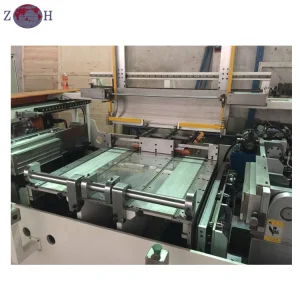
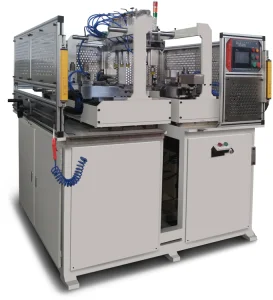
Furthermore, our final assembly processes rely on automated radiator water tank crimping systems. These machines use force-controlled tooling to secure plastic tanks to aluminum header plates, applying even pressure across the gasket surface. This automated approach ensures consistent sealing pressure, reducing leak rates under high dynamic pressures.
Our long-term R&D efforts are focused on developing clean, highly efficient thermal management systems.
Reducing flow passage diameters to less than 1.0mm, which increases fluid contact area and improves overall heat transfer rates.
Integrating pressure sensors and bypass valves directly into radiator header plates to support real-time thermal monitoring.
Expanding the use of recycled aluminum formulations that reduce carbon footprints while maintaining structural and thermal performance.
Common questions regarding our engineering specifications, production capabilities, and distribution logistics.
Explore our battery modules, stamping tooling, and automated production machinery for advanced thermal management.
 Rock Auto