Electrolysis can quietly damage an aluminum car radiator long before a driver notices overheating. Small coolant leaks, pinhole marks, and crusty deposits often appear first. What causes electrolysis in automotive aluminum radiators? The answer usually involves several connected faults, not one isolated problem.
Electrical current may travel through contaminated coolant when the cooling system lacks proper grounding. Weak engine-to-chassis straps can make the radiator part of an unintended circuit. Mixed metals, such as aluminum, steel, copper, and brass, can also accelerate galvanic reactions. Incorrect coolant, poor water quality, or neglected fluid changes may reduce corrosion protection. Even a recently installed radiator can suffer when old hoses, clamps, or fittings introduce contamination.
Technicians often test coolant voltage with a digital multimeter before replacing parts. A reading above the vehicle maker’s specification deserves investigation, especially with the engine running and accessories switched on. Visual inspection matters too. Pinholes near welds, swollen tubes, and dark coolant can reveal a developing problem. However, voltage testing alone cannot prove the radiator caused the fault. That distinction is important.
This 2026 guide examines the leading causes of electrolysis in automotive aluminum radiators. It connects workshop symptoms with cooling-system design, maintenance habits, and electrical grounding. Manufacturer service information remains the most reliable reference because radiator materials and coolant requirements differ. Blaming the radiator is easy. It is not always correct. A careful diagnosis can prevent repeated leaks, unnecessary replacement, and another expensive failure.
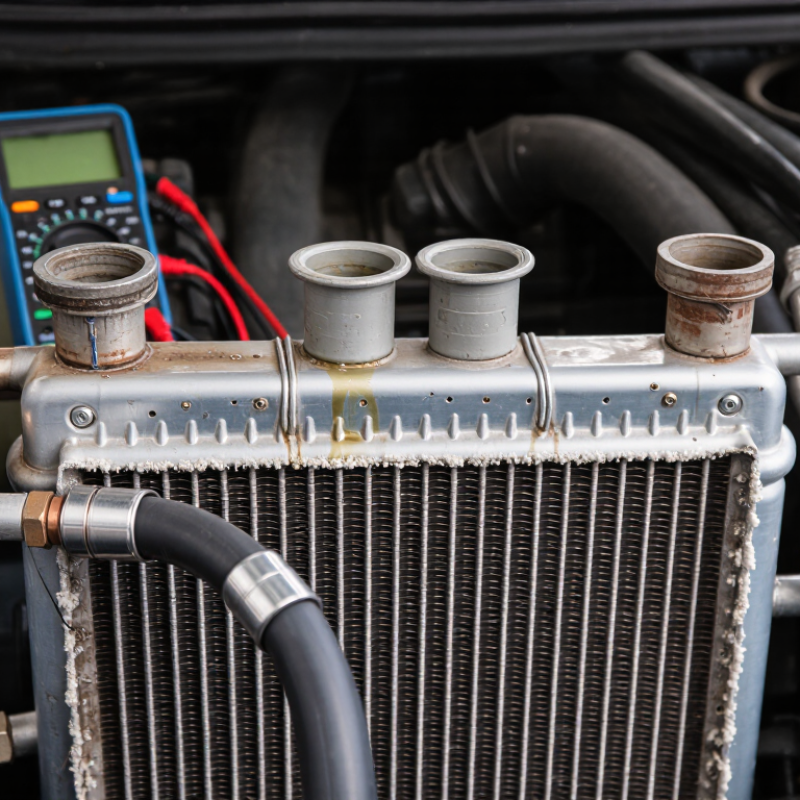
Electrolysis in an aluminum car radiator is an unwanted electrical reaction inside the cooling system. It occurs when stray current travels through the coolant. The radiator can become part of that circuit. Aluminum ions slowly leave the metal surface. This is corrosion driven by electricity, not ordinary rust. Small pinholes may appear near tubes, seams, or mounting areas. The leak often starts quietly.
Common causes include poor grounding, damaged wiring, and mixed metals touching the coolant. Old or contaminated coolant can conduct current more easily. A technician can measure voltage between the coolant and a clean engine ground. Readings above a few tenths of a volt deserve investigation, but testing methods matter. Probe placement and coolant temperature can affect results. One reading is not proof.
During inspection, look for wet spots, white residue, dark pitting, or repeated coolant loss. These details can reveal more than a pressure test alone. A proper repair may require correcting the electrical fault, flushing the system, and refilling it with suitable coolant.
Do not replace the radiator without checking the cause. That mistake can leave the new aluminum damaged again. The process is not perfect; even experienced technicians can misread early corrosion when the leak is hidden beneath dirt or brackets.
2026 Top Causes of Electrolysis in Aluminum Car Radiators
Coolant chemistry can turn an aluminum radiator into a quiet electrical cell. Glycol itself conducts poorly, but aged coolant carries ions, acids, and dissolved metals. As corrosion inhibitors weaken, conductivity rises. Small electrical currents then move through the coolant and attack aluminum surfaces.
The damage often begins as tiny pits around tube joints or the radiator core. White powder, dark stains, and repeated coolant loss may appear later. Oxidized coolant can lower pH and create acidic compounds. Excessive alkalinity can also damage aluminum. Both conditions matter. Mixed metals, poor grounding, and damaged electrical connections may increase the current path.
During inspections, technicians should test coolant pH and conductivity, not only its color. A clean-looking coolant can still be chemically exhausted. Measuring voltage between the coolant and a reliable engine ground may reveal unwanted current, but one reading is not a verdict. Test with the engine off and running, then inspect grounding straps and wiring. Use the vehicle maker’s specified coolant chemistry and water quality.
In practice, many failures have more than one cause. I have seen a radiator blamed for electrolysis when neglected coolant started the process. I have also seen fresh coolant fail after a weak ground remained unrepaired. The inspection is not perfect. Still, fluid analysis, electrical testing, and close examination of pits provide stronger evidence than appearance alone.
Mixed metals are a major cause of electrolysis in aluminum car radiators. Aluminum is lightweight, but it reacts differently from copper, brass, steel, and cast iron. When these metals connect through conductive coolant, a small electrical cell can form. Coolant then carries current between the metal surfaces. That current slowly removes aluminum from tubes, seams, or core passages.
Small voltage readings matter.
In radiator inspections, I often check grounding straps, mounting points, and coolant condition before blaming the radiator itself. A weak engine ground can push electrical current through the cooling system. Old coolant can also become more conductive after absorbing dirt, moisture, and metal particles. The result may appear as pinholes, white residue, or dark corrosion around joints. However, a voltage reading alone is not a diagnosis. Testing should compare the coolant, radiator, engine block, and battery ground with a reliable meter.
Mixed-metal assemblies deserve closer attention in 2026. Aluminum radiators may connect to steel clamps, copper-alloy fittings, and iron engine components. Even small contact areas can create localized corrosion when protective coatings are damaged. Using compatible coolant, maintaining correct concentration, and replacing corroded ground connections can reduce the risk. Galvanic corrosion and true electrical electrolysis are related, but they are not identical. I have seen repairs fail because both problems were treated as the same fault. A careful technician should inspect coolant chemistry, grounding resistance, and metal contact points together. Sometimes the radiator is only the visible victim.
Electrical faults can create stray current damage inside an aluminum car radiator. The coolant becomes an unintended conductor. Current then travels through metal components instead of following the designed ground path. This process can attack thin radiator tubes, soldered joints, and internal passages. Small pinholes may appear before any serious temperature increase. That makes the problem easy to miss.
A weak engine ground is a common cause. Loose battery connections, damaged ground straps, and poorly repaired wiring can raise voltage through the cooling system. Technicians should test voltage between the coolant and a clean engine ground with the engine running. Readings should remain very low. A changing reading deserves attention. Coolant condition matters too. Old coolant, mixed fluids, or contaminated water can increase conductivity and accelerate corrosion.
Do not blame the radiator immediately. I have seen electrical readings blamed on coolant alone, while a damaged ground cable remained unnoticed. That assumption can waste time. Inspect connection points, measure resistance with the battery isolated, and check for voltage drop under load. Testing at different engine speeds may reveal an intermittent fault. The method is simple, but results can be misleading if the meter ground is dirty. Replace contaminated coolant only after correcting the electrical fault. Otherwise, the new coolant may suffer the same damage.
2026 Top Causes of Electrolysis in Aluminum Car Radiators?
How Poor Maintenance Accelerates Aluminum Radiator Failure
Electrolysis often begins quietly inside an aluminum radiator. Poor coolant maintenance is a major trigger. Old coolant loses its corrosion inhibitors and becomes electrically active. Mixed coolant types can worsen this change. Small electrical currents then travel through the coolant and attack aluminum tubes, seams, and fittings.
In workshop inspections, I look for cloudy coolant, white deposits, and pinhole leaks near tube joints. A multimeter can reveal suspicious voltage between the coolant and radiator ground. Readings above a few tenths of a volt deserve investigation. The exact limit depends on the vehicle and test method. A quick glance can mislead.
Weak grounding also accelerates radiator damage. Corroded ground straps may force current through the cooling system. Dirty connections create resistance and unpredictable current paths. Regular coolant testing helps identify rising acidity, contamination, or excessive conductivity. The reservoir should not be treated as a permanent maintenance record. It only shows a small part of the system.
Flushing intervals matter. So does the water used during service. Hard water can leave mineral deposits and alter coolant performance. Distilled or properly treated water is usually safer when the coolant instructions permit it. I have also seen technicians blame electrolysis too quickly, ignoring road debris and vibration. That mistake delays the real repair. A clean electrical ground, correct coolant mixture, and documented inspections give aluminum radiators a better chance of surviving daily heat cycles.
Coolant can become an unintended conductor. Current may travel through radiator tubes instead of the proper ground path. Thin tubes can develop tiny pinholes. The temperature may still look normal.
Loose battery connections, damaged ground straps, and repaired wiring can create unwanted voltage. Corroded connection points add resistance. The fault may appear only under load.
Measure voltage between the coolant and a clean engine ground while the engine runs. Test at different engine speeds. A changing reading deserves investigation. Keep the meter ground clean.
Old coolant may lose its corrosion inhibitors. Mixed coolant types can increase electrical activity. Contaminated water may also raise conductivity. It can look cloudy.
Check for white deposits, cloudy coolant, and pinhole leaks near tube joints. Inspect seams and fittings closely. Small leaks may appear before overheating.
Not immediately. A damaged ground cable may be the real cause. I have seen coolant blamed too quickly. That wastes repair time.
Flushing helps only after the electrical fault is corrected. Otherwise, fresh coolant may suffer the same damage. Check the ground path before replacing coolant.
Hard water can leave mineral deposits inside the cooling system. Use distilled or properly treated water when instructions allow it. Record coolant tests and service intervals. Records help, but they are not perfect.
Electrolysis in an aluminum car radiator is an electrochemical reaction that gradually dissolves or weakens the metal, often causing pinhole leaks, surface pitting, and premature cooling-system failure. What causes electrolysis in automotive aluminum radiators? Common causes include coolant chemistry that has become acidic, contaminated, or depleted of protective additives. Poor maintenance, infrequent coolant replacement, improper water, and mixed or incompatible coolant types can increase electrical conductivity and speed up corrosion.
The risk also rises when aluminum is connected to other metals, such as steel, copper, or cast iron, because differences in electrical potential can create galvanic activity. Electrical faults, damaged grounds, poor bonding, or stray current from vehicle components may further drive corrosion through the coolant. Regular inspections, correct coolant selection, proper grounding, and maintaining the cooling system at the recommended level can help reduce electrolytic damage and extend the service life of an aluminum radiator.

Rock Auto