China’s automotive aluminum market is expanding with vehicle production, electrification, and lightweighting. The China Association of Automobile Manufacturers reported 30.16 million vehicles produced in 2023. New-energy vehicles accounted for more than 9.5 million units. These figures show why supplier selection now affects capacity, quality, and delivery risk.
Global demand is also changing. The International Energy Agency’s Global EV Outlook 2024 recorded almost 14 million electric-car sales in 2023. Electric vehicles require lighter structures, battery housings, crash components, and thermal-management parts. Ducker Carlisle’s North American Light Vehicle Aluminum Content Study forecasts average aluminum content rising to 514 pounds per vehicle by 2030. That matters.
How to identify a high-quality automotive aluminum supplier? Start with evidence, not attractive product photos. Review IATF 16949 certification, process capability data, PPAP experience, laboratory controls, and customer references. Ask to see melt-lot traceability, alloy certificates, dimensional reports, and corrective-action records. A reliable supplier should explain how it controls extrusion temperature, casting chemistry, surface treatment, and final inspection.
Visit the factory when possible. Watch how operators handle coils, profiles, and finished housings. Check whether calibrated instruments are visibly used. Confirm production capacity against your forecast, not only the supplier’s brochure. Sustainability also deserves verification. Request energy data, recycled-content evidence, and a clear environmental-management system.
No checklist is perfect. A polished audit can still miss weak shift controls or unstable subcontracting. Recheck critical claims through samples, trial orders, and independent testing. The best China automotive aluminum supplier is not always the cheapest. It is the partner that repeatedly delivers compliant material, consistent dimensions, transparent records, and practical engineering support.
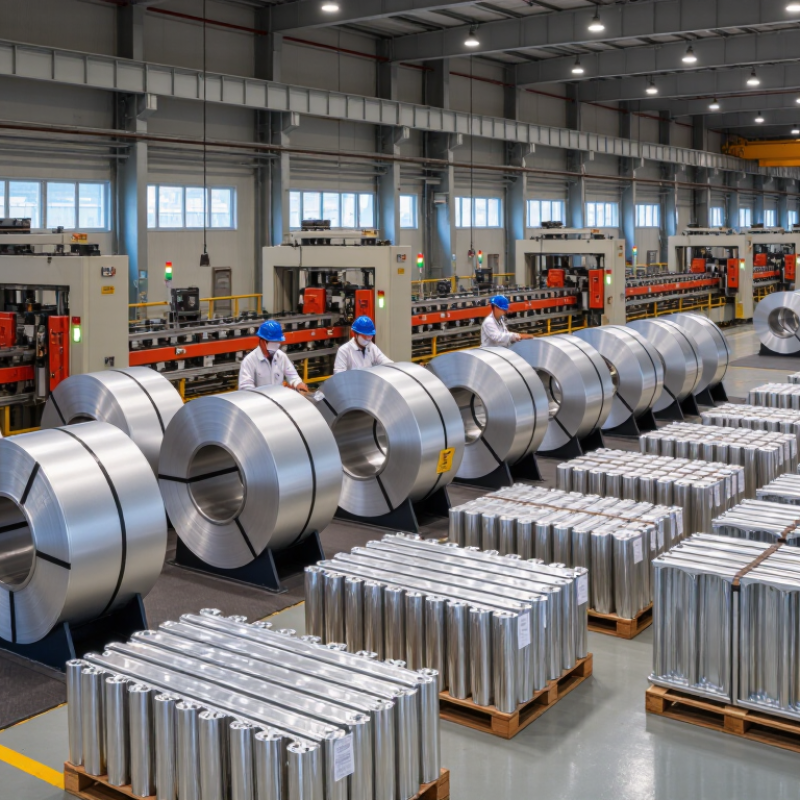
A reliable China automotive aluminum supplier proves consistency beyond a polished sample. China Association of Automobile Manufacturers data shows 31.28 million vehicles were produced in 2024. That scale demands stable extrusion, casting, and machining controls. Ask for batch records, alloy composition, tensile results, and dimensional inspection reports. A supplier should also explain how it isolates nonconforming material.
Quality systems matter. IATF 16949 certification supports process discipline, but it does not replace your audit. Check furnace records, calibration dates, traceability labels, and corrective-action evidence. The International Energy Agency reported nearly 14 million electric car sales worldwide in 2023. Electric vehicles increase demand for lightweight parts, tighter tolerances, and dependable corrosion performance. Therefore, experience with battery housings, structural profiles, or thermal components can reveal useful technical maturity. Still, experience alone is not proof. I would review recent production samples under real assembly conditions.
Tips: Request a small pilot order before signing a long contract. Test surface finish, hardness, weldability, and salt-spray resistance. Compare the certificate with independent laboratory results. Confirm monthly capacity, packaging details, export experience, and emergency response times. One overlooked detail is packaging; damaged edges can ruin an excellent profile. I have seen suppliers communicate quickly but document poorly. That weakness deserves attention. A lower price may look attractive, yet unstable tolerances create hidden tooling and rework costs. Reliable cooperation is measurable, traceable, and sometimes less impressive than expected.
Choosing a China automotive aluminum supplier begins with a clear product definition. What will your project actually require? A body panel may need sheet, while a structural rail may need an extrusion or forging. State the component, forming method, annual volume, and delivery schedule. Small details matter.
Specify alloy and temper, not merely “automotive aluminum.” Common choices include 5xxx alloys for formed panels and 6xxx alloys for extrusions. The required strength, corrosion resistance, weldability, and crash performance should guide selection. Include width, thickness, length, flatness, dimensional tolerances, and permissible surface marks. For a visible trim part, define the finish and protective film. For a hidden bracket, appearance may matter less.
Ask the supplier for mill test certificates, chemical analysis, mechanical results, and batch traceability. Request samples cut from the intended production route. Check whether the supplier controls extrusion speed, heat treatment, straightening, and inspection. Third-party testing can verify hardness, tensile strength, coating thickness, or corrosion resistance. Confirm packaging before approval; thin sheets can arrive with edge dents after a long sea journey. We once treated packaging as a minor purchase detail. That was a mistake. A specification can still be incomplete when it ignores storage humidity, assembly tooling, or real delivery conditions. Supplier audits, process records, and responsive corrective actions reveal more than a polished catalog.
Start by matching the required automotive product with its alloy, temper, strength level, and forming needs. The chart below shows representative mechanical-property levels commonly used for automotive aluminum applications.
Formable 5xxx-series sheet is commonly selected for body panels and battery enclosures, while heat-treatable 6xxx-series alloys are widely used for structural extrusions, crash-management components, and chassis parts. Final specifications should be confirmed against the required standard, thickness, surface finish, dimensional tolerance, corrosion resistance, and supplier testing documentation.
A reliable supplier must prove quality beyond a polished presentation. The ISO Survey 2022 recorded over 1.2 million ISO 9001 certificates worldwide, but certification alone cannot confirm automotive consistency. Check whether the factory holds IATF 16949 and valid environmental certifications. Request the certificate number, issuing body, scope, and expiry date. Then verify them independently. Ask for control plans, material certificates, dimensional reports, and corrective-action records from recent production lots.
Production capacity needs physical evidence. The IEA reported global electric car sales exceeded 14 million in 2023, increasing pressure on lightweight component supply chains. Visit the facility, or arrange a live video audit. Count extrusion presses, heat-treatment lines, machining centers, and inspection equipment. Review monthly output, utilization, maintenance records, and backup capacity. A supplier claiming 10,000 tonnes annually should explain press sizes, alloy mix, shift patterns, and realistic lead times. Numbers without bottleneck details are weak evidence.
Test the process, not only the sample. Request a small trial order with full traceability from billet receipt to packing. Check alloy chemistry, tensile strength, hardness, surface finish, and profile tolerances through an independent laboratory when necessary. Ask for PPAP documents, gauge repeatability results, and Cpk data for critical dimensions. I would not trust my first factory impression. Clean floors can distract from unstable processes. Even capable suppliers may lack redundancy, so review tooling backups, raw-material sourcing, and communication during quality failures.
How to Choose the Best China Automotive Aluminum Supplier?
Price comparison should begin with the same technical definition. Ask for alloy grade, temper, thickness tolerance, surface finish, testing, tooling, and packaging. A low price may exclude dies, inspection, or export documentation. The World Bank Commodity Markets Outlook identifies aluminum as a price-sensitive industrial commodity, so request a clear metal-price adjustment formula. Fix the conversion fee separately. That makes future quotations easier to audit.
Minimum order quantity deserves equal attention. The International Aluminium Institute reports that transport consumes about 27% of global aluminum demand. Automotive programs therefore need stable, repeatable supply, not only a cheap trial batch. Compare MOQ by alloy, profile, and production run. A supplier accepting 500 kilograms may charge more per unit, yet reduce inventory risk. Ask whether unused billet, tooling, and rejected pieces are billed. Small details matter.
Delivery conditions must be written, not promised verbally. Compare production lead time, port handling, Incoterms, insurance, and customs responsibilities. The U.S. Geological Survey estimated global primary aluminum production at roughly 70 million metric tons in 2023, but large capacity does not guarantee your delivery slot. Request a sample schedule with inspection dates and shipment milestones. Check ISO 9001 or IATF 16949 systems, material certificates, dimensional reports, and PPAP capability. A spreadsheet can still mislead. Recheck every assumption before signing.
| Anonymous Supplier Profile | Typical Product Focus | Common Alloy Grades | Indicative FOB Price Range* | Minimum Order Quantity | Standard Production Lead Time | Sample or Prototype Lead Time | Typical Payment Terms | Common Delivery Conditions | Quality and Compliance Documents | Best Fit For |
|---|---|---|---|---|---|---|---|---|---|---|
| Profile A High-volume extrusion specialist |
Automotive structural profiles, EV battery frames, door and window reinforcement sections | 6061-T6, 6063-T5/T6, 6082-T6 | US$3.20–4.60/kg | 1–3 metric tons per profile or approximately 500–1,000 kg for repeat items | 25–40 days after drawing approval and deposit | 10–18 days | 30% deposit; 70% before shipment or against shipping documents | FOB major Chinese port; CIF available by quotation | Mill test certificate, dimensional inspection report, chemical composition report, RoHS/REACH declaration where applicable | Large recurring programs that need competitive pricing and stable extrusion capacity |
| Profile B Precision CNC and machined-parts supplier |
Machined aluminum brackets, housings, battery components, suspension and powertrain parts | 6061-T6, 6082-T6, 7075-T6, A380 for selected die-cast components | US$8.00–18.00/kg | 100–300 pieces for prototypes; 500–2,000 pieces for production orders | 20–35 days, depending on machining complexity and surface treatment | 7–15 days | 30% deposit; balance before shipment, with credit terms subject to approval | EXW, FOB, or DAP depending on shipment size and destination | FAI report, CMM inspection data, material certificate, PPAP support, surface-finish inspection | Complex components requiring tight tolerances, traceability, and engineering support |
| Profile C Die-casting production partner |
Aluminum housings, motor covers, inverter cases, structural die-castings | A380, ADC12, AlSi9Cu3 and equivalent customer-specified grades | US$4.50–8.50/kg | 500–1,000 pieces for initial orders; tooling is normally quoted separately | 35–60 days, including tooling and first-article approval | 20–30 days after tooling completion | 30% tooling deposit and 30% production deposit; balance before shipment | FOB or CIF; export packaging and palletization usually available | Material certificate, casting-process report, dimensional report, leak test report where required, PPAP documentation | Medium-to-large castings where part consolidation and high production volume reduce unit cost |
| Profile D Small-batch and prototype supplier |
Prototype extrusions, low-volume brackets, test fixtures, replacement automotive parts | 6061-T6, 6063-T5, 5052-H32 and customer-approved alternatives | US$6.00–15.00/kg | 50–200 kg or 50–200 pieces, depending on product type | 10–25 days for standard products; 20–35 days for custom tooling | 5–12 days | 50% deposit; 50% before shipment is common for small orders | EXW or FOB; courier and air-freight arrangements commonly supported | Basic material certificate, inspection report, sample approval record, packing list and commercial invoice | New product development, engineering validation, and low-risk pilot orders |
| Profile E Integrated extrusion and finishing supplier |
Extruded rails, heat sinks, trim profiles, anodized and powder-coated automotive components | 6063-T5/T6, 6061-T6, 6005A-T6 | US$4.00–7.50/kg | 300–800 kg per finish and profile; lower quantities may incur setup charges | 30–50 days, including extrusion, finishing, inspection, and packing | 12–20 days | 30% deposit; 70% before shipment or against a mutually agreed document set | FOB, CIF, and occasionally DDP for qualified destinations | Alloy certificate, coating or anodizing thickness report, color approval, dimensional report, packaging specification | Programs requiring one supplier to coordinate extrusion, surface treatment, and export packing |
How to Choose the Best China Automotive Aluminum Supplier?
What Should You Verify Before Signing a Supply Agreement?
Before signing, verify the supplier’s legal identity, factory address, and production scope. Request recent business licenses, quality certificates, and customer-audit records. Do not rely on a polished website alone. A video call should show extrusion lines, heat-treatment equipment, inspection stations, and finished stock.
The technical agreement needs precise details. Confirm alloy grade, temper, dimensions, surface finish, straightness, and allowable tolerances. Ask for sample reports, chemical composition results, tensile data, and dimensional inspection records. For automotive components, traceability matters. Each batch should connect to a furnace number, inspection record, and packing label. Small gaps become expensive later.
Check whether the supplier can maintain stable output during peak demand. Review monthly capacity, maintenance plans, backup equipment, and lead times for tooling. Ask how nonconforming parts are isolated and corrected. Include inspection rights, sampling methods, packaging standards, delivery terms, warranty handling, and corrective-action deadlines in writing. Payment terms also deserve careful review, especially for tooling and rejected batches.
Visit the facility if possible. Look closely.
A supplier may pass one sample and still struggle with repeated production. I have seen teams focus heavily on price, then discover inconsistent profiles during assembly. That mistake is avoidable, though not always easy. Request a pilot order, measure the parts independently, and compare actual results against the signed specification before committing to long-term volumes.
Request recognized quality and environmental certificates. Check the certificate number, issuing body, scope, and expiry date. Verify them independently. Certification helps, but it cannot prove stable production.
Visit the factory or arrange a live video audit. Count extrusion presses, heat-treatment lines, machining centers, and inspection equipment. Review monthly output, utilization, maintenance, and backup capacity. Capacity claims need process details.
Ask for material certificates, control plans, dimensional reports, and corrective-action records. Review documents from recent production lots. Recent evidence matters more than attractive presentations.
Yes. Start with a small trial order and require full traceability. Check alloy chemistry, tensile strength, hardness, surface finish, and profile tolerances. Use an independent laboratory when results seem uncertain. One sample can mislead you.
Use identical technical requirements for every quotation. Specify alloy, temper, thickness tolerance, finish, testing, tooling, and packaging. Ask for separate conversion fees and a clear metal-price adjustment formula. A cheap quote may hide important costs.
Compare minimum quantities by alloy, profile, and production run. Ask whether unused billet, tooling, or rejected pieces are charged. A smaller order may cost more per unit. It can still reduce inventory risk.
Confirm production lead time, port handling, insurance, customs duties, and delivery responsibilities. Request shipment milestones and inspection dates. Large factory capacity does not guarantee your production slot. Check the schedule twice.
Define alloy grade, temper, dimensions, finish, straightness, and tolerances. Each batch should link to a furnace number, inspection record, and packing label. Include inspection rights, packaging rules, warranty handling, and correction deadlines. Do not rely on verbal promises.
Choosing the right China automotive aluminum supplier requires more than comparing a few quotations. A reliable partner should demonstrate consistent material quality, clear technical communication, stable production capacity, and experience in automotive applications. Start by defining your project’s requirements, including alloy grade, temper, dimensions, surface treatment, tolerance, strength, corrosion resistance, and required forms such as sheets, profiles, tubes, or machined components. The question “How to identify a high-quality automotive aluminum supplier?” can be answered by reviewing inspection procedures, quality management systems, relevant certifications, testing records, equipment, and production scalability.
You should also compare pricing based on the complete supply scope rather than unit cost alone. Carefully review minimum order quantities, tooling fees, packaging, payment terms, lead times, shipping responsibilities, and after-sales support. Before signing a supply agreement, confirm product specifications, sample approval procedures, quality standards, inspection rights, delivery schedules, documentation, confidentiality, warranty terms, and procedures for handling nonconforming goods. A detailed agreement helps reduce misunderstandings and supports a stable, long-term supply relationship.

Rock Auto